
VICTORIA FALLS – Mutapa Investment Fund has unveiled an ambitious strategy aimed at transforming Zimbabwe’s artisanal and small-scale mining sector from largely informal operations into a safer, more productive and sustainable industry that contributes meaningfully to the country’s economic development agenda.
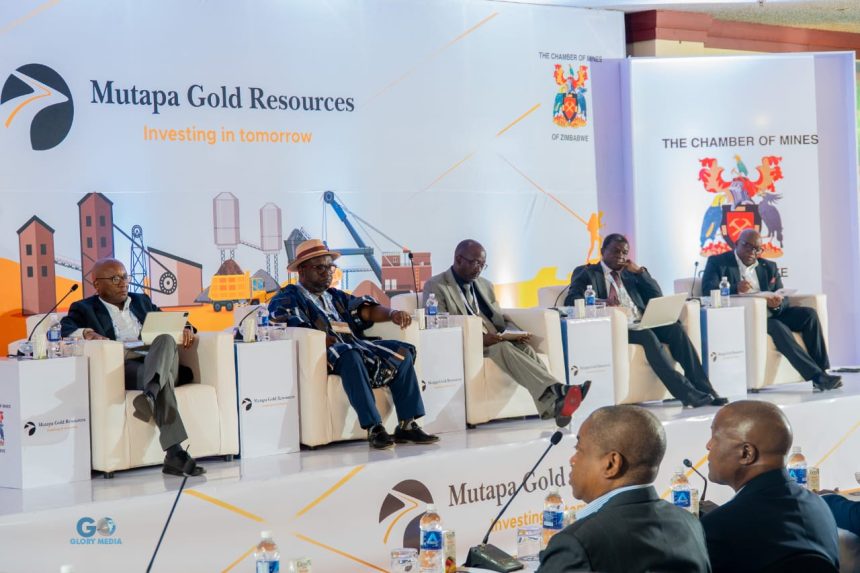
Speaking during an interview with Manhize Post on the sidelines of the Chamber of Mines of Zimbabwe Annual Conference and Exhibition in Victoria Falls, Mutapa Investment Fund General Manager Engineer Tirivashe Vere said the focus should be on empowering artisanal miners rather than criminalising their activities.
Zimbabwe’s mining sector continues to rely heavily on artisanal and small-scale miners, who account for a significant share of mineral production, particularly gold. However, the sector has long been plagued by challenges including unsafe mining practices, inadequate technical knowledge, limited access to capital, poor geological information and environmental concerns.
Eng Vere said Mutapa has adopted a developmental approach that seeks to formalise the sector while improving safety and efficiency.

“We have chosen to support and equip artisanal miners rather than chase them away. The objective is to ensure that they operate formally, safely and sustainably while maximising the value of the country’s mineral resources,” he said.
A key challenge facing small-scale miners is the lack of accurate geological information, often leading to wasted effort and low productivity. To address this, Mutapa is directing miners towards areas with known mineral occurrences and supporting exploration activities to improve mining success rates.
The fund is also investing in capacity-building initiatives through partnerships with institutions such as the Zimbabwe School of Mines. The programmes provide miners with practical training in mine safety, geology, surveying and responsible mining practices.
According to Eng Vere, the collaboration between industry and academia is critical in professionalising a sector that has historically operated with limited technical support.
Technology is also becoming a central pillar of the transformation programme.
Mutapa has introduced modern monitoring systems including ground-penetrating technologies and three-dimensional mapping tools that help identify underground risks and improve mine planning. The innovations are expected to reduce accidents, prevent resource wastage and improve operational efficiency across mining sites.
Beyond mining operations, Mutapa is facilitating partnerships between artisanal miners and established industry players through twinning arrangements that provide access to processing facilities and reliable markets. The model is designed to ensure miners receive fair value for their minerals while reducing exploitation and inefficiencies associated with informal trading systems.
Eng Vere said the organisation has also begun implementing cost-optimisation initiatives aimed at lowering production costs and increasing profitability for small-scale miners. Experts are currently analysing mining and processing activities to identify opportunities for greater efficiency and value creation throughout the production chain.
The interventions come as Zimbabwe seeks to accelerate growth within the mining sector under Vision 2030 and the National Development Strategy, both of which place mining at the centre of economic transformation and industrialisation.
As discussions continue at the Chamber of Mines conference in Victoria Falls, industry leaders believe the formalisation and empowerment of artisanal miners could unlock significant opportunities for employment creation, increased mineral output and sustainable resource utilisation.
For thousands of artisanal miners across Zimbabwe, the message from Mutapa is clear: the future lies not in informal survivalist mining, but in organised, technology-driven and sustainable operations capable of contributing to national development.