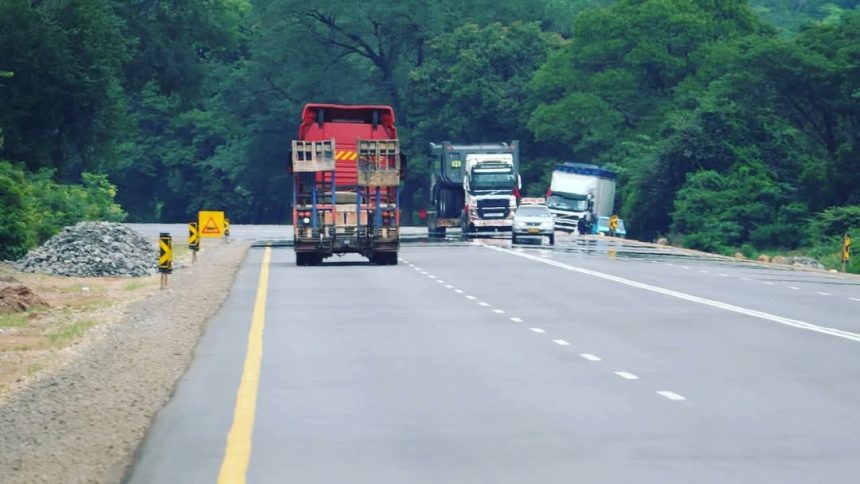

For decades, the Harare–Masvingo highway was viewed in simple terms: a transport route connecting the capital to the south. Trucks used it, buses depended on it, and commuters tolerated it. But today, that same stretch of road is quietly evolving into something far more significant — a developing economic artery shaping the future of central and southern Zimbabwe.
What is emerging can best be described as a “highway economy.” Instead of development being concentrated only in cities and established industrial centres, activity is now spreading outward along major transport routes. The road itself is becoming a platform for business, logistics, and industrial expansion.
The change is visible in small but important ways. New service stations, truck stops, warehousing points, informal markets, and roadside service businesses are multiplying along the route. These are not random developments. They are responding to a growing flow of goods, materials, and labour moving between Harare, the Midlands, and Masvingo.
Mvuma sits almost at the centre of this transformation, functioning as a natural midpoint where long-distance transport slows down, refuels, and re-engages. That simple geographic advantage is now translating into economic relevance. What used to be a brief stopover is becoming a micro-commercial hub.
Truck drivers are among the most consistent drivers of this new economy. Their demand for fuel, food, accommodation, mechanical services, and rest facilities has created a parallel service economy along the highway. In many cases, entire micro-business ecosystems have formed around these needs — from informal food stalls to structured rest lodges.
But beyond roadside commerce, a deeper structural shift is taking place. The highway is increasingly being used as a logistics corridor for industrial supply chains. Construction materials, agricultural produce, mining inputs, and manufactured goods now move in higher volumes than before. This increased freight movement is encouraging private sector investment in storage yards, transport depots, and distribution points.
Economists often describe such transitions as the early stages of corridor-based development — where infrastructure determines economic geography. Instead of cities expanding outward first, roads themselves become the initial triggers of growth.
In Zimbabwe’s case, this shift aligns with broader national ambitions to boost industrial production and improve internal connectivity. As industrial projects expand in the Midlands and beyond, the Harare–Masvingo route is increasingly positioned as a strategic link in that chain.
However, the growth is still uneven. While economic activity is increasing along the road, supporting infrastructure such as sanitation, regulated trading spaces, and urban planning frameworks are struggling to keep pace. Without coordinated development, there is a risk that much of the activity remains informal and under-optimised.
Despite these challenges, the direction of travel is clear. The highway is no longer just a road. It is becoming an economic system — one that connects production, transport, and emerging commercial hubs into a single evolving corridor.
And at the heart of that system, towns like Mvuma are no longer accidental stops. They are becoming essential nodes in Zimbabwe’s changing development map.