
EDITORIAL: Zimbabwe’s lithium future must be understood in facts, not fear
Zimbabwe’s lithium sector is undergoing one of the most significant industrial transformations in its modern economic history. Yet, as global attention intensifies, so too does the spread of fragmented narratives that risk obscuring the real structural changes taking place on the ground.
Recent reporting by Al Jazeera English (18 June 2026) confirms what is already visible across the country’s mining corridors: Zimbabwe’s lithium industry is being reshaped by large-scale foreign investment, with Chinese-backed companies playing a leading role in developing mines, building processing plants, and integrating the country into global battery supply chains.
The central question is not whether foreign investment is present—it clearly is—but whether Zimbabwe is effectively converting its mineral endowment into long-term national value.
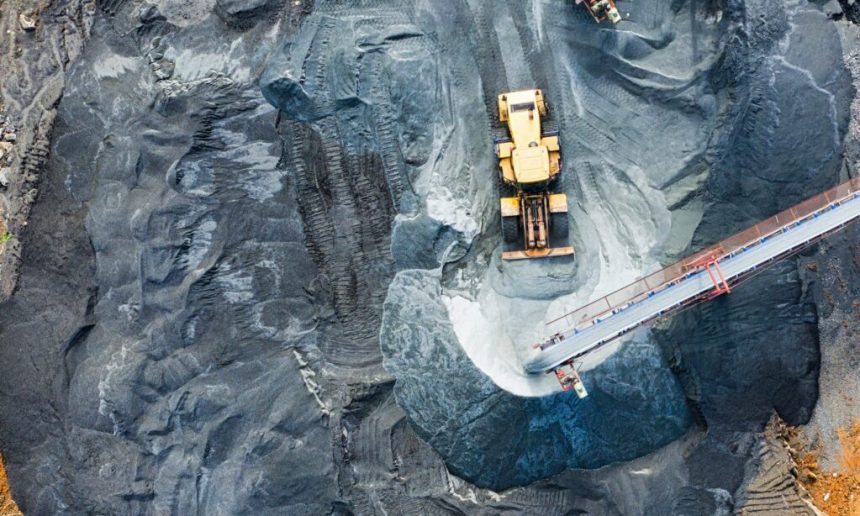
Zimbabwe’s lithium production is currently driven by a small number of large industrial projects, including Bikita Minerals in Masvingo Province, Arcadia near Harare, Kamativi in Matabeleland North, and several emerging sites across the country. These operations are not small-scale ventures; they are capital-intensive, mechanised mining projects requiring advanced processing infrastructure.
According to Al Jazeera’s reporting, most of these operations are backed by foreign capital, particularly Chinese mining and battery material companies, which have become the dominant investors in Zimbabwe’s lithium sector over the past several years.
Companies such as Sinomine Resource Group and Zhejiang Huayou Cobalt have acquired and expanded major lithium assets, injecting hundreds of millions of dollars into acquisition, expansion, and processing infrastructure.
For example, Bikita Minerals—one of the world’s largest lithium deposits—was acquired by Sinomine in 2022 for approximately US$200 million, while Huayou Cobalt acquired the Arcadia project for around US$422 million.
These are not speculative figures; they reflect confirmed transaction values and publicly documented investments.One of the most important structural shifts in Zimbabwe’s lithium sector is the move toward local beneficiation and processing, driven by government policy and foreign investment alignment.
Recent Reuters reporting confirms that Chinese-backed companies are constructing lithium sulphate processing plants in Zimbabwe, marking a shift away from exporting raw or semi-processed lithium concentrates.
Huayou Cobalt’s Arcadia project has already developed a large-scale processing facility with the capacity to produce tens of thousands of tonnes of lithium sulphate annually. Similar plants are being developed at Bikita and Kamativi under Sinomine and Yahua Group.
Zimbabwe has also introduced policy measures aimed at restricting raw lithium exports, reinforcing its long-term objective of capturing more value domestically through processing rather than extraction alone.
This shift is critical: lithium sulphate production places Zimbabwe one step closer to participating in the global battery manufacturing chain, rather than remaining a supplier of raw minerals.
Zimbabwe’s experience is not isolated. Across Africa and other emerging economies, Chinese investment has played a central role in scaling up critical mineral production needed for the global energy transition.
In the Democratic Republic of Congo, Chinese-backed firms dominate cobalt and copper supply chains, both essential for EV batteries. In Zambia, Chinese investment has expanded copper production capacity and infrastructure development. In Indonesia, partnerships with Chinese companies have transformed nickel into a fully integrated battery manufacturing sector, attracting global EV manufacturers.
These cases demonstrate a broader global trend: developing countries are increasingly becoming strategic nodes in the clean energy supply chain, supported by foreign capital and technology transfer. Zimbabwe is now part of that same global realignment.
The lithium boom has already contributed to increased export earnings, job creation in mining regions, and expansion of industrial infrastructure. Government revenue from mining royalties and export levies has also increased in line with rising production volumes.
However, Al Jazeera’s reporting also highlights an important reality: the benefits of the lithium boom remain uneven, and questions persist around how much value is retained locally versus externally.
This is not unique to Zimbabwe. Across global mining economies, the central challenge is not resource availability, but governance, industrial capacity, and value retention.
Countries that have successfully maximised mineral wealth such as Indonesia in nickel did so through strict enforcement of local processing requirements combined with sustained infrastructure investment.
Zimbabwe’s current policy direction suggests a similar ambition, but execution will determine outcomes. Lithium is no longer a niche industrial input. It is a foundational resource for electric vehicles, renewable energy storage, and global decarbonisation strategies.
Demand remains structurally strong despite short-term price fluctuations, and countries with reserves and processing capacity are increasingly central to global industrial planning.
Zimbabwe’s position is therefore strategic—not accidental.
The presence of major international investors reflects not only resource availability, but also Zimbabwe’s integration into global supply chain realignments driven by the energy transition.
Zimbabwe’s lithium story should not be reduced to speculation or simplified narratives. The facts are clear: large-scale foreign investment—particularly from Chinese firms—is driving industrial expansion, processing capacity is increasing, and the country is actively shifting toward value addition.
The real national question is not whether investment is happening, but whether Zimbabwe is maximising its long-term benefit from it.That requires three things: policy consistency, infrastructure development, and strengthened domestic industrial capacity.
Lithium is not just a mineral opportunity. It is a test of economic strategy. Zimbabwe’s success will not be determined by the presence of investors—but by how effectively the country converts investment into lasting industrial transformation.