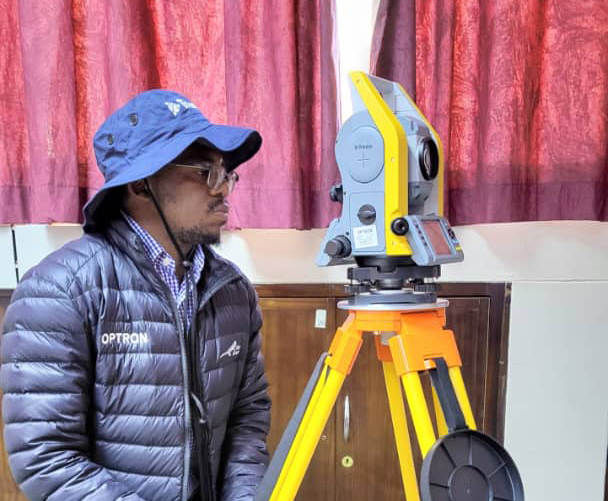

The Ministry of Mines and Mining Development has taken a significant step toward modernising Zimbabwe’s mining sector through a week-long intensive training programme on Trimble Access conventional surveying, conducted at the Zimbabwe School of Mines.
Mine surveyors from the Ministry recently completed the rigorous training, which focused on strengthening competence in modern digital surveying techniques designed to improve accuracy, efficiency, and seamless integration of field data into office-based mine planning systems.
The programme forms part of a broader national strategy to enhance technical capacity within the mining sector and ensure that mineral resource management is guided by precise, reliable, and real-time spatial data. By equipping surveyors with advanced digital tools, the Ministry is reinforcing its commitment to improving operational efficiency and aligning Zimbabwe’s mining practices with global technological standards.
Trimble Access, a widely adopted surveying platform in the global mining and geospatial industry, enables professionals to capture and process high-precision field data with improved speed and consistency. The system allows direct transfer of survey information from field operations to digital mine models, significantly reducing delays associated with manual data processing and minimizing the risk of human error.
In practical terms, the training is expected to deliver measurable improvements across the mining value chain. Enhanced surveying accuracy supports more reliable mine design, improved mineral resource estimation, better safety planning, and more efficient monitoring of mining activities. It also plays a key role in reducing boundary disputes, strengthening regulatory compliance, and improving the overall governance of mining operations.
For Zimbabwe, where mining remains a critical pillar of economic development, such advancements are particularly important. The sector continues to demand higher levels of precision in data management as operations expand and become more technologically complex. The introduction and strengthening of digital surveying skills among government surveyors therefore represents a timely intervention.
Despite the progress, challenges remain in fully transitioning from traditional surveying methods to fully digital systems. These include the need for continuous professional development, consistent access to updated equipment, and the strengthening of digital infrastructure to support real-time data integration across institutions.
Nevertheless, the completion of the intensive training marks an important milestone in building a future-ready mining workforce. It reflects a growing emphasis on human capital development within the sector, ensuring that surveyors are not only technically competent but also equipped to operate in increasingly data-driven mining environments.
As Zimbabwe continues to modernise its mining sector in line with national development goals, initiatives such as this training programme underscore a clear shift toward precision-based, technology-driven resource management that enhances efficiency, accountability, and long-term sustainability.