Few institutions carry as much weight in shaping the modern world as the United Nations Security Council. It is the arena where wars are debated, peace is negotiated, sanctions are imposed, and the boundaries of global power are quietly defined. Zimbabwe’s return to this influential body marks more than a diplomatic milestone — it reflects a shifting global order in which Africa’s voice, resources, and political influence are becoming increasingly central to international decision-making.
The United Nations Security Council (UNSC) is one of the six principal organs of the United Nations, established in 1945 in the aftermath of the Second World War. Its creation was driven by a singular global ambition: to prevent another catastrophic conflict and to establish a permanent system for maintaining international peace and security. Unlike other UN bodies, the Security Council holds binding authority over all member states, meaning its resolutions are not recommendations but obligations. Its decisions can authorize sanctions, deploy peacekeeping missions, enforce ceasefires, and in extreme circumstances, approve the use of force.
At the centre of the global security architecture is the United Nations Security Council, composed of fifteen member states. Five of these are permanent members — the United States, the United Kingdom, France, Russia, and China — collectively known as the P5. These nations hold veto power, allowing any one of them to block substantive resolutions, a feature that continues to define the geopolitical balance of the Council.
The remaining ten seats are non-permanent members elected for two-year terms by the United Nations General Assembly. These seats are distributed on a regional basis to ensure global representation: Africa holds three seats, Asia-Pacific two, Latin America and the Caribbean two, Western Europe and other states two, and Eastern Europe one. This structure reflects both historical compromise and ongoing debates about fairness and reform in global governance.
Becoming a non-permanent member is a rigorous diplomatic process. Countries must first secure endorsement from their regional group, often through consensus-building within regional blocs such as the African Union. Once endorsed, they embark on sustained global diplomacy, engaging in bilateral and multilateral negotiations to secure support from the wider UN membership. The final election is conducted by secret ballot in the UN General Assembly, where a candidate must obtain a two-thirds majority of votes to win a seat. The process is highly competitive, reflecting not only diplomatic influence but also international trust and credibility.
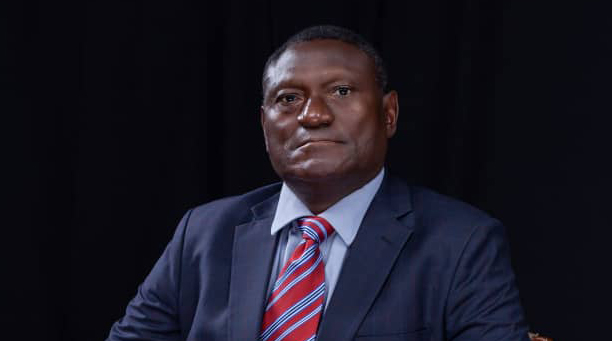
Zimbabwe’s election to the Security Council for the 2027–2028 term represents a significant return to the global diplomatic stage. The country has previously served twice — first in 1983–1984 and again in 1991–1992. Its initial term came shortly after independence, during a period when Zimbabwe was defining its position within the international system against the backdrop of Cold War tensions and regional liberation struggles in Southern Africa.
The second term in the early 1990s coincided with a transformative moment in world history: the end of the Cold War and the emergence of a new global order. During that period, the Security Council expanded its role in peacekeeping operations and increasingly became a central platform for managing post-conflict transitions and international crises.
Today, Zimbabwe’s return occurs in a fundamentally different global environment. The nature of security has evolved beyond traditional military conflict to include economic stability, energy transitions, climate resilience, cyber governance, and access to strategic resources. In this context, countries rich in critical minerals — including lithium, platinum group metals, chrome, nickel, and gold — occupy a more prominent position in global strategic thinking.
For Africa and the Southern African Development Community (SADC), Zimbabwe’s election carries broader regional significance. It strengthens the collective African voice within one of the world’s most powerful institutions and reinforces long-standing calls for reform of global governance structures that still reflect post-1945 geopolitical realities. It also provides a platform to advance regional priorities on peacebuilding, economic justice, and equitable participation in global trade and development systems.
More broadly, Zimbabwe’s presence on the Council reflects the gradual repositioning of Africa within global affairs. The continent is no longer viewed solely through the lens of aid and development assistance, but increasingly as a strategic partner in global stability, resource security, and economic transformation. This shift is reshaping how international institutions engage with African states, particularly in discussions that intersect with industrial development and supply chain security.
Ultimately, the Security Council remains the epicentre of global decision-making on peace and security. Zimbabwe’s return to this platform is therefore more than symbolic. It is a reaffirmation of its place within the international system at a time when global power is becoming more dispersed, more competitive, and more interconnected.
From Harare to New York, the conversation at the heart of global power continues — and Zimbabwe once again has a seat at the table where the world is shaped.